Anatomy of aWhitetail 2: All Terrain Hooves
Why PA Whitetails Don’t Need Fancy Hiking Boots
If you’ve ever spent a November morning huffing and puffing up a ridge in Potter County, you know the Pennsylvania mountains aren't exactly a paved sidewalk. Between the slick shale slides, frozen mud, and those hidden "ankle-breaker" rocks buried under the leaves, it’s a miracle we don’t all end up in a cast by the first day of late season archery.
But while we’re stumbling around in $300 boots, the local whitetails are sprinting past us like they’re on a flat track. How? It all comes down to the mechanical genius of their hooves.
The Anatomy of a Mountain Goat (in a Deer Suit)
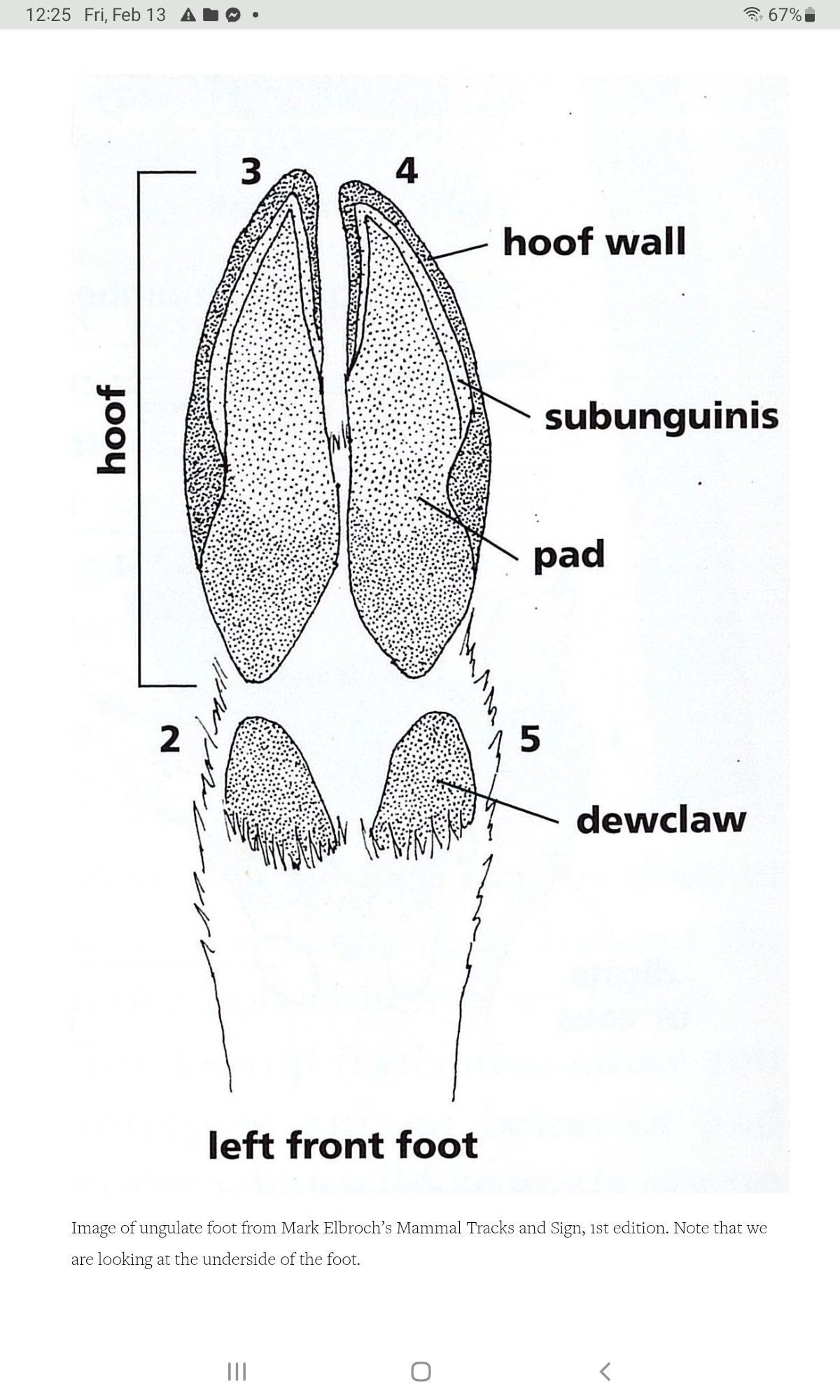
A whitetail’s hoof isn’t just one solid block of wood. It’s actually split into two main parts, called cloven hooves. Think of them like a pair of high-tech, organic pliers.
The Hard Outer Shell: The wall of the hoof is made of hard keratin (the same stuff in your fingernails, just way tougher). This acts like the "tread" on a Super Swamper mud tire, digging into the Pennsylvania clay.
The Soft Inner Pad: Inside that hard shell is a softer, rubbery bulb. This acts like a Rancho shock absorber and provides "grip" on smooth surfaces like wet rocks or downed hemlocks.
The Independent Suspension: Each side of the hoof can move independently. When a buck hits a jagged rock on a steep PA hillside, the hoof spreads out to distribute his weight. It’s basically a built-in 4-wheel drive system.
The "Emergency Brake": Dewclaws
Ever notice those two little nubbins further up the back of the leg? Those are the dewclaws. On flat ground, they don't do much. But when a deer is hauling mail down a 45-degree mountain slope to escape a hunter, those dewclaws dig into the dirt like an emergency brake, preventing a catastrophic "deer-slide."
Why They Outrun Us Every Time
While we’re busy slipping on wet oak leaves, the whitetail’s hoof is doing a thousand tiny calculations per second.
Pro-Tip: If you see a deer track where the toes are splayed wide and the dewclaws are deep in the mud, he wasn't just walking—he was in "Sport Mode" and probably smelled your ham sammich from three ridges away.
The design is so efficient that a deer can clear a 7-foot blowdown and land on a pile of loose shale without even twisting an ankle. Meanwhile, if most of us step on a rogue acorn the wrong way, we’re calling for a ride back to the truck.
The Pennsylvania woods are unforgiving, but the whitetail is literally built for the chaos. They’ve got the best "tires" in the business, and they don't even have to worry about a monthly payment.
Final Thoughts:
You too can get around the PA mountains with ease, but not bare footed like a whitetail 🤔 For that, you can purchase help in the form of cleats for traction on ice. Or big lugged boots for traction in mud or slippery leaves and snow. Experiment with different methods to see what works for you. Good luck out there DIY'ers and feel free to leave a comment below…